
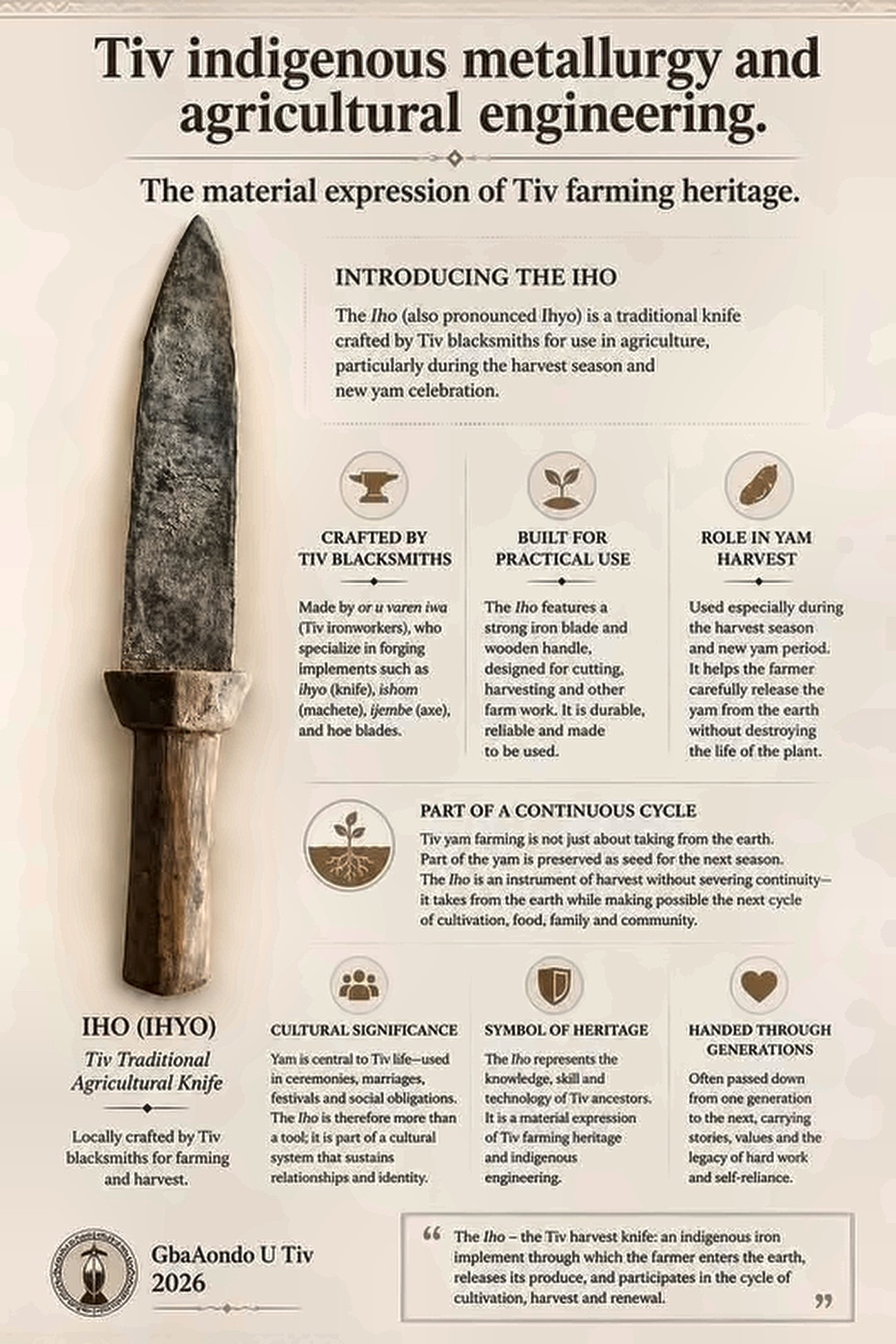
The Iho (also pronounced Ihyo) is a traditional knife crafted by Tiv blacksmiths for use in agriculture, particularly during the harvest season and the new yam celebration. It is the material expression of Tiv farming heritage.
Crafted by Tiv blacksmiths
Made by or u varen iwa (Tiv ironworkers), who specialise in forging implements such as the ihyo (knife), ishom (machete), ijembe (axe) and hoe blades.
Built for practical use
The Iho has a strong iron blade and a wooden handle, designed for cutting, harvesting and other farm work. It is durable, reliable and made to be used.
Its role in the yam harvest
It is used especially during the harvest season and the new yam period. It helps the farmer carefully release the yam from the earth without destroying the life of the plant.
Part of a continuous cycle
Tiv yam farming is not just about taking from the earth. Part of the yam is preserved as seed for the next season. The Iho is an instrument of harvest without severing continuity: it takes from the earth while making the next cycle of cultivation, food, family and community possible.
More than a tool
- Cultural significance: yam is central to Tiv life, used in ceremonies, marriages, festivals and social obligations. The Iho is part of a cultural system that sustains relationships and identity.
- Symbol of heritage: it represents the knowledge, skill and technology of Tiv ancestors, a material expression of Tiv farming heritage and indigenous engineering.
- Handed through generations: often passed down from one generation to the next, carrying stories, values and the legacy of hard work and self-reliance.
The Iho, the Tiv harvest knife: an indigenous iron implement through which the farmer enters the earth, releases its produce, and participates in the cycle of cultivation, harvest and renewal.